

-

6 Vanilla Layering Combinations to Make Vanilla Your Own Oct 15, 2026
-

Daily Perfume on Hair Can Dry Strands; Try a Hair Mist Oct 14, 2026
-

EDT vs Body Mist: Layer a Cheaper Mist for Longer Wear Oct 13, 2026
-

Choose Perfume Online: Quiz, Sample, Layer With Body Mist Oct 12, 2026
-

When to Apply Body Mist: Shower First, Patch Test, Then Layer Oct 11, 2026
-

Signature Scent vs Layering: Choose Fast, Start With Two Bottles Oct 10, 2026
-

Science Backed Tips to Make Fragrance Last Longer Without Heavy Sprays Oct 09, 2026
-

24–72 Hour Test for Light Fragrances for Sensitive Noses Oct 08, 2026
-

What You Actually Smell: Test Perfume Notes in 15 Minutes–4 Hours Oct 07, 2026
-

Make Perfume Last in Hot Weather: 2–3 Light Sprays Oct 06, 2026


Deodorant and perfume are not rivals fighting for the same job, so wearing both is not only fine, it is standard practice for most people. Deodorant deals with bacteria and sweat; perfume builds the scent you actually want people to notice. The simple rule: apply deodorant to clean, dry underarms, let it dry fully, then spray perfume on pulse points like your wrists and neck. If you own a fragrance you want to shine on its own, switch to an unscented deodorant so nothing competes with it.
TL;DR:
- Use unscented deodorant if you want your perfume to be the main focus and avoid scent clashes.
- Apply deodorant first, wait three minutes to dry, then spray perfume on pulse points like wrists and neck.
- Choose deodorant formats based on your routine: sprays for quick dry, roll-ons for longer protection, and creams for sensitive skin.
- Layer scents within the same family, such as citrus with aquatic or floral with floral, to prevent conflicts.
- Store fragrances in cool, dark places to preserve scent quality and check for color or smell changes after opening.
Table of Contents
- Perfume and deodorant: what each one actually does
- When to use deodorant, perfume, or both
- The correct order for applying perfume and deodorant
- How to layer scents without one cancelling the other out
- Choosing a deodorant that won’t compete with your perfume
- How Sofragrance makes safe layering simple
- Where to store perfume and deodorant so they last
- Common mistakes people make when applying perfume and deodorant
- Safety considerations and skin reactions to watch for
- What actually matters when you’re layering scent
- Try Sofragrance’s layering sets before you commit to a full bottle
- Sources
- FAQ
Perfume and deodorant: what each one actually does
Deodorant’s job is bacteria control. Sweat itself doesn’t smell; it’s the bacteria breaking it down on your skin that causes odour, and deodorant works by making that environment harder for bacteria to thrive in. Many deodorants are also antiperspirants, meaning they contain aluminium salts that physically reduce how much you sweat by temporarily blocking sweat ducts. Perfume does something entirely different: it’s a concentrated blend of fragrance oils, alcohol, and water, built in layers of top, heart, and base notes that unfold over hours.
This is why swapping one for the other doesn’t work. Body sprays lack the antibacterial or antiperspirant compounds that actual deodorant needs to keep odour under control, so they mask a smell rather than manage it. A body spray fades within an hour or two because it’s formulated to be light; a proper deodorant is built to keep working through a working day.
Format matters too, and it’s not just personal preference:
- Spray deodorants dry fast and leave little residue, which suits people who want quick coverage before dressing.
- Roll-ons deposit more product on the skin, giving longer antiperspirant action but a slower dry time.
- Cream and stick formats sit closest to the skin and often include moisturising ingredients, useful for sensitive underarms.
- Body mists are diluted fragrance, closer to perfume in purpose than to deodorant, and fade faster because they carry a lighter concentration of scent oils.
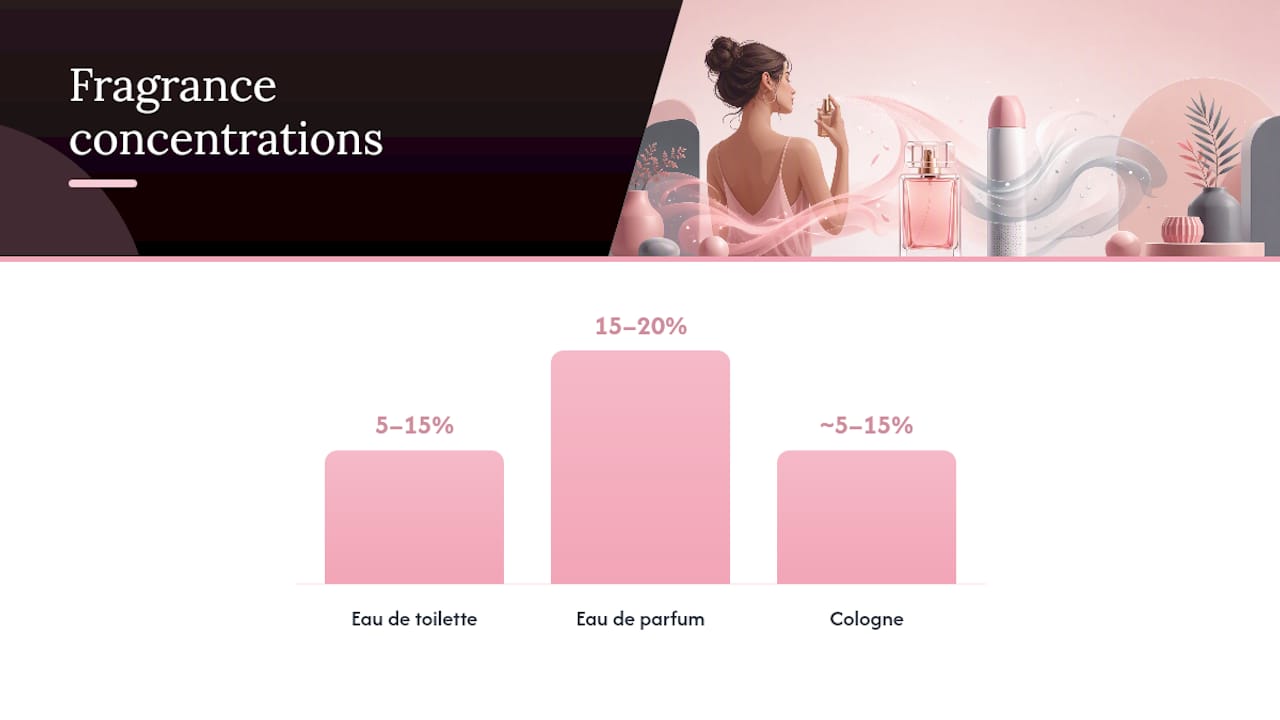
Perfume concentration changes everything about how long a scent lasts. Eau de toilette sits around 5 to 15% fragrance oil and tends to fade within three to five hours. Eau de parfum runs higher, often 15 to 20%, and can hold on your skin for six hours or more. Cologne, the lightest common concentration, is closer to eau de toilette in strength but often marketed toward men’s fragrance collections. None of these numbers are fixed law: skin type, weather, and even what you ate can shift how long a scent survives.
When to use deodorant, perfume, or both
Matching your routine to the occasion saves you from over-thinking it every morning. A few situations come up again and again:
- Everyday wear. Deodorant is non-negotiable here. A perfumed deodorant or a light spritz of perfume on top is a nice extra, not a requirement, especially on a low-key day at a desk.
- Gym or exercise. Skip the heavy perfume. Sweat plus strong fragrance oils can turn unpleasant fast, and a light, unscented or barely-scented deodorant does the actual job of managing odour.
- Work or social settings. This is where perfume earns its place. A dab of eau de parfum layered over deodorant gives you a scent that carries through a meeting or a dinner without becoming overpowering by mid-afternoon.
- Evenings and events. Layer deliberately here: deodorant first, then perfume on pulse points, and consider a top-up in your bag if the night runs long.
Weather changes the maths slightly. Heat makes fragrance molecules evaporate faster, so a scent that lasts six hours in winter might fade in three during a heatwave. If you sweat heavily, lean toward an antiperspirant rather than a standard deodorant, since it’s actually addressing the moisture that speeds up odour, not just the smell. Some deodorants are fragranced strongly enough that they can stand in as your only scent for a casual day, which is worth knowing if you’d rather not carry two products.
The correct order for applying perfume and deodorant
Getting the sequence right prevents the two products from fighting each other on your skin. Deodorant goes on first, always, and it needs a few minutes to dry before anything else touches that area. Applying perfume straight on top of wet deodorant mixes the two chemically and can leave a muddled, slightly synthetic smell rather than either scent doing its job cleanly.
Where you spray perfume matters just as much as when. Pulse points, the wrists, the neck, behind the ears, the chest, run warmer than the rest of your skin, and that warmth helps release fragrance molecules gradually through the day. The underarm is not one of these points; it’s the deodorant’s territory, not perfume’s.
- Wait at least two to three minutes after applying deodorant before dressing or spraying perfume nearby.
- Use two to three sprays of perfume, no more, focused on pulse points rather than a full-body mist.
- Never rub your wrists together after spraying; it breaks down the top notes and shortens how long the scent lasts.
- A light, unscented moisturiser on pulse points before perfume can help the fragrance cling longer, since dry skin loses scent faster than hydrated skin.
- For touch-ups, reach for a body mist rather than reapplying full perfume, since it refreshes without overwhelming what’s already developed on your skin through the day.
Pro Tip: If you’re applying both in a rush, spray your deodorant, get dressed, and save perfume for the very last thing before you leave the house. That gap alone is usually enough drying time, and it stops you from second-guessing the order.
How to layer scents without one cancelling the other out
Fragrance families exist for a reason, and pairing within or near the same family is the safest way to layer without a clash. Citrus scents sit comfortably with aquatic or fresh notes. Florals pair well with other light florals rather than anything heavy or spiced. Woody fragrances work with herbal or other woody notes. Gourmand scents, the vanilla and caramel-leaning ones, blend naturally with creamy or sweet deodorant fragrances rather than sharp, green ones.
Choosing an unscented deodorant is the safest move if you’ve invested in a perfume with a complex structure you want people to actually notice, since even a subtly scented deodorant can dull or distort delicate top notes before they’ve had a chance to develop. That’s especially true with alcohol-based deodorants: alcohol speeds up evaporation, and applying two alcohol-heavy products to the same small patch of skin can burn off a perfume’s opening notes before you’ve even left the house.
Contrast can work, but it takes a lighter hand than most people assume. A heavier, more dramatic perfume paired with a fresh, barely-there deodorant can be striking rather than clashing, precisely because the deodorant isn’t trying to compete.
A few starting points worth trying:
- Citrus perfume + fresh or aquatic deodorant
- Floral perfume + unscented or lightly floral deodorant
- Gourmand or vanilla perfume + creamy or sweet-scented deodorant
- Woody or spiced perfume + herbal or unscented deodorant
Trial-and-error is genuinely part of the process here. Retailers that sell matching deodorant and perfume ranges do so specifically because pairing scents from the same line removes the guesswork, but even then, judge the combination over several hours, not the first ten minutes. A perfume’s drydown, the phase after the top notes burn off, can smell completely different from how it opened, and that’s the version you’ll be wearing most of the day.
Choosing a deodorant that won’t compete with your perfume
If you’ve settled on a signature scent, your deodorant choice becomes part of the decision, not an afterthought. A few checks before you commit to one:
- Go unscented or near-unscented if your perfume is the one doing the talking. Even a “clean linen” deodorant carries fragrance oils that can muddy delicate notes.
- Weigh aluminium against aluminium-free formulas. Antiperspirant residue changes how a perfume evaporates off the skin, which can shift projection and how quickly a scent settles into its drydown.
- Match the format to your day, not just your nose. A spray suits quick mornings; a cream suits sensitive skin that needs the extra moisture.
- Patch-test anything new. A deodorant that smells fine in the shop can still cause irritation or an unexpected scent shift once it’s warmed against your skin for a few hours.
None of this needs to be complicated. It’s closer to picking the right base coat before you commit to a colour: get the foundation right, and everything layered on top behaves the way you expect it to.
How Sofragrance makes safe layering simple
Sofragrance built its body mist and perfume ranges around the idea that scent should be something you play with, not something you’re afraid to get wrong. The SO…? Unique collection is designed specifically for layering, letting you build a scent in stages rather than committing to one bottle.
- Apply deodorant first, let it dry, then start with the lightest mist in a set and build upward.
- The Love Storm bundle shows how three complementary mists, truffle cream, sweet pea, and cashmere, can be worn alone or combined depending on the occasion.
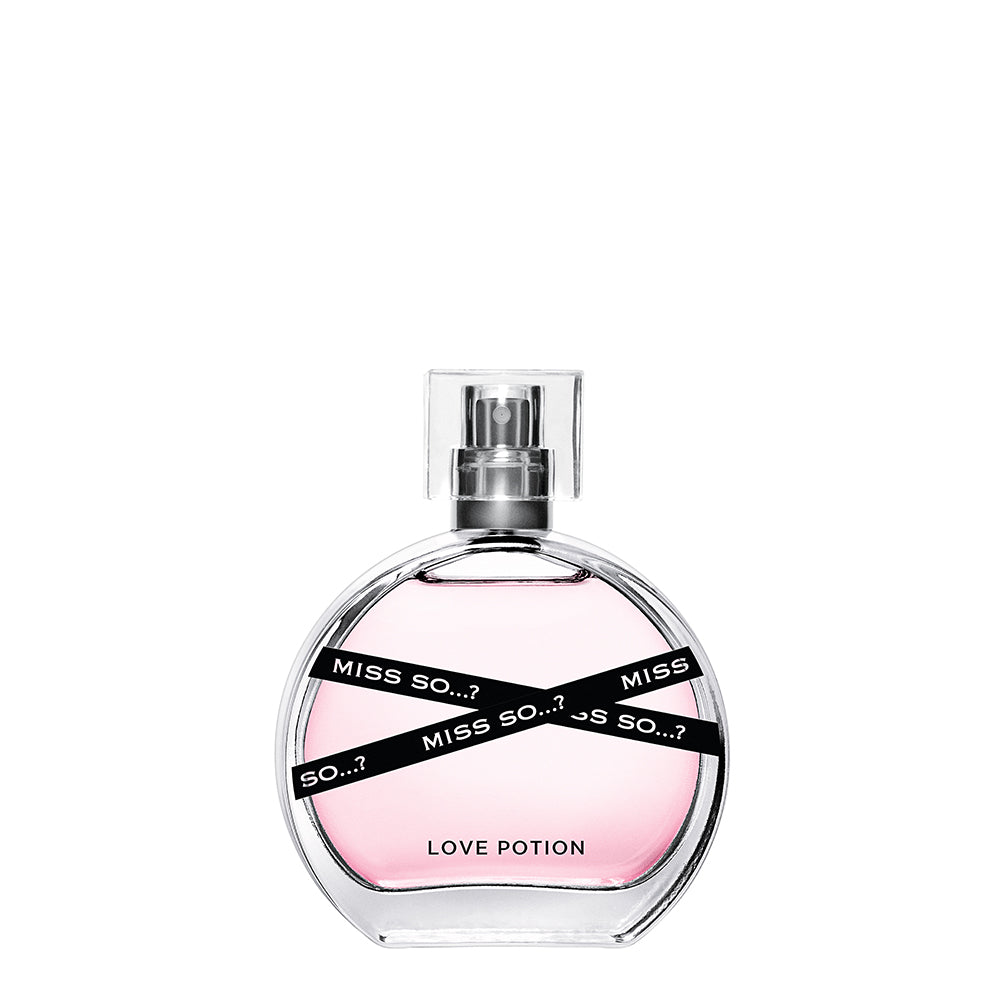
- A signature perfume like Miss SO…? Love Potion works well paired with an unscented deodorant on days you want it to stand fully on its own.
This is publisher-recommended content from Sofragrance, not a neutral survey of every brand on the market.
Where to store perfume and deodorant so they last
Heat, light, and air are the three things that shorten a fragrance’s life, whether it’s sitting in a perfume bottle or a deodorant stick. Perfume should live somewhere cool and dark, a drawer or a cupboard, rather than on a sunlit windowsill or bathroom shelf where steam and temperature swings speed up the breakdown of fragrance oils. An unopened eau de parfum can hold its character for three to five years; once opened, oxygen starts working on it, so most perfumes are at their best within one to two years of first use.
Deodorant is less fragile but not indestructible. Sticks and creams can separate or soften in high heat, and aerosol cans lose pressure over time regardless of how much product is left inside. Roll-ons are the most prone to drying out once opened, since the ball mechanism exposes the formula to air every time it’s used.
A few habits protect both:
- Keep lids and caps tightly closed between uses to slow oxidation.
- Store perfume upright to reduce the fragrance oil’s contact with the cap’s inner seal.
- Avoid leaving either product in a car during summer; cabin temperatures can exceed what either formula is designed to handle.
- Check for colour changes or a sharper, sourer smell in perfume, both are signs it’s past its best, even if the bottle isn’t empty.
Common mistakes people make when applying perfume and deodorant
The most frequent error is simple: too much product. Overloading on deodorant doesn’t improve odour control; it just increases the chance of irritation and leaves more residue for your perfume to fight through later in the day. A thin, even layer is genuinely enough.
Spraying perfume directly onto fabric rather than skin is another common habit, usually done to “make it last longer.” It doesn’t work that way; fragrance develops through contact with your skin’s warmth and natural oils, and fabric can trap synthetic-smelling top notes without ever letting them evolve properly.
Rubbing wrists together after applying perfume feels natural but breaks down the top notes through friction, cutting the opening phase short. Spraying perfume onto the same underarm area as deodorant is another one worth dropping; that spot is already doing a different job, and stacking two strong products there usually just muddies both.
Finally, skipping the drying gap between deodorant and perfume is easy to do when you’re rushing, but it’s the single biggest reason people end up smelling like a chemical blur rather than two products working in harmony.
Safety considerations and skin reactions to watch for
Both deodorant and perfume sit close to some of the most sensitive skin on the body, so reactions aren’t rare. Redness, itching, or a mild rash under the arms is usually a sign of irritation from aluminium salts, alcohol, or added fragrance, and it tends to show up within a day or two of switching products. Perfume applied directly to freshly shaved or broken skin is a common trigger too, since alcohol content can sting and, in some people, cause a genuine contact reaction.
Patch-testing matters more than most people give it credit for. Applying a small amount to the inside of your elbow and waiting 24 to 48 hours before full use catches most sensitivities before they become a problem on your underarms or neck. If a product ever causes swelling, blistering, or a reaction that doesn’t calm down within a day or two, stop using it and speak to a pharmacist or doctor rather than pushing through.
People with genuinely sensitive skin often do better with fragrance-free or hypoallergenic deodorants and lighter concentrations of perfume, saving heavier eau de parfum formulas for pulse points only rather than broader application. It’s not about avoiding fragrance altogether; it’s about giving your skin fewer variables to react to at once.
What actually matters when you’re layering scent
Most advice on fragrance pairing treats it like a rulebook, when it’s really closer to seasoning food: the “rules” exist to stop you making an obvious mistake, not to box you in. Three things are worth remembering. Deodorant and perfume have different jobs and should be applied in that order, with drying time between them. Matching scent families reduces clashes, but an unscented deodorant is the safest bet when a perfume matters to you. Skin chemistry changes outcomes more than any bottle’s marketing does.
My honest bias: buy small sizes before committing to a full bottle. A scent that smells right on a card almost never behaves the same way on skin, and the only way to know is to wear it for a few hours. Patch-test anything new, always.
— Damini
Try Sofragrance’s layering sets before you commit to a full bottle
Some fragrance brands have ranges built around the problem this article has been solving: how to combine scents without one drowning out the other, at prices that make experimenting cheap rather than risky. Instead of gambling on a single full-size perfume, you can test how fragrances behave on your own skin, layered your own way, for a fraction of the cost.
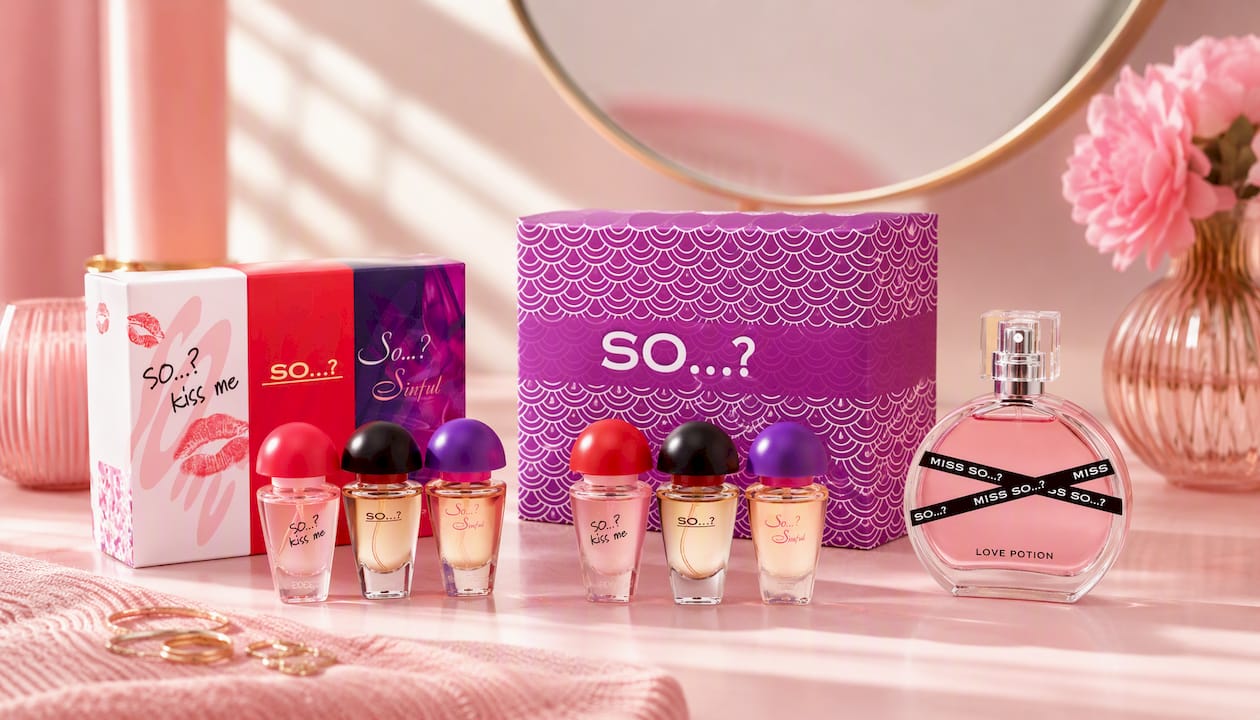
The SO…? Trio Set is the obvious starting point if you want to play with layering the way this article describes, three complementary scents in a size small enough to experiment without waste. If you’re buying for someone else, or want a curated set that takes the guesswork out entirely, the Three For Me Premium Gift Set does that job well. And if you’ve found the pairing you like and want a scent that can stand on its own, Miss SO…? Love Potion Eau De Parfum is built to be worn as a signature, with an unscented deodorant underneath.
Browse the full SO…? Unique range or the wider perfume collection and pick a starter set to try this week.
Sources
- Difference between deodorant and body spray | Sure
- When deodorant meets perfume: how your antiperspirant shapes fragrance | PerfumerOnline
- Mix & match: How to combine deodorant and perfume properly | Woodberg
FAQ
Should you use deodorant and perfume together?
Yes, using both is standard practice because they solve different problems: deodorant manages bacteria and sweat, while perfume creates the scent you want to be remembered by. Apply deodorant first, wait for it to dry, then spray perfume on pulse points rather than the underarm.
Is it okay to put perfume on your armpits?
It’s not recommended, since underarm skin is warmer, often freshly shaved, and already carrying deodorant, which increases the chance of irritation or a muddled scent. Pulse points like the wrists and neck give perfume a cleaner surface to develop on.
Where can you buy a matching deodorant and perfume set online?
Sofragrance sells layering sets designed to be worn together, including the SO…? Trio Set and the Three For Me Premium Gift Set, both built around complementary scents rather than a single fixed fragrance. Prices are shown on each product page rather than listed generically.
How do you layer perfume over deodorant properly?
Apply deodorant to clean, dry skin and give it two to three minutes to dry before getting dressed. Then spray perfume sparingly on pulse points such as the wrists, neck, and chest, avoiding the underarm entirely so the two products don’t mix and dull each other’s effect.
