
-

Passionfruit Body Mists: How to Wear, Layer and Choose Oct 25, 2026
-

Sweet vs Fresh Perfumes: How to Choose Your Scent Oct 24, 2026
-

Frangipani Body Mists: How to Choose, Wear and Layer Oct 23, 2026
-

Gourmand vs Floral Perfume: How to Choose and Layer Oct 22, 2026
-

Perfume on a Plane in the UK: What You Can Pack in 2026 Oct 21, 2026
-

Almond Body Mists: Scents, Layering Ideas and How to Choose Oct 20, 2026
-

Green Tea Body Mists: How to Choose and Layer One Oct 19, 2026
-

Gardenia Body Mists: Find Your Tone With a Mini Discovery Set Oct 18, 2026
-

Floral vs Fruity Perfume: Layer Them Without Clashing Oct 17, 2026
-

Perfume Projection vs Longevity: Test First, Layer Second Oct 16, 2026


Fragrance trends 2026 come down to one shift: nobody’s wearing just one perfume any more. It’s about building a wardrobe of layered, textured scents, creamy musks, hyper-real fruit, savoury gourmands, and swapping a single signature scent for a stack you mix depending on mood. The easiest way in is a discovery set or a body-mist bundle, so you can test several directions before committing to one.
TL;DR:
- Building a fragrance wardrobe with layered scents is now more popular than relying on a single signature scent in 2026.
- Lactonic gourmands with milk, coconut, and toasted nut notes are replacing sugary vanilla, offering warm, intimate textures that linger close to the skin.
- Photorealistic fruit notes like yuzu and dark plum are trending, best paired with wood or musk to avoid sounding juvenile or overly sharp.
- Refillable formats, travel-friendly solid balms, and hair mists are expanding how consumers can reapply and layer scents throughout the day.
- Mass-market brands now emphasize honesty in ingredients, sustainability signals like refill schemes, and use AI-driven methods to develop more diverse, affordable fragrances.
Table of Contents
- What are the fragrance trends 2026 has in store?
- Why the fragrance wardrobe is replacing the signature scent
- Elevated gourmands: from sugary to savoury
- Fruity photorealism: fruit that smells like actual fruit
- Creamy musks and the rise of the ‘skin halo’
- Format innovation: mists, solids and refillables
- Niche notes, storytelling and the appeal of imperfection
- Sustainability and wellness: what actually matters when buying
- How sustainability and clean beauty are reshaping fragrance
- Technology’s growing role in fragrance creation
- Regional and cultural influences shaping 2026 scent
- Which fragrance families are gaining or losing ground
- Brands and designers setting the pace for 2026
- Social media’s grip on what smells “of the moment”
- Why 2026 rewards experimentation over commitment
- Try the year’s biggest scent trends without committing to a full bottle
- Sources
- FAQ
What are the fragrance trends 2026 has in store?
Eight themes keep surfacing across this year’s launches and editorial coverage, and most of them are built to be worn together rather than alone.
- Fragrance wardrobing – mixing two or three mists or perfumes instead of relying on one signature scent.
- Lactonic gourmands – milk, rice and coconut notes replacing sugary vanilla, best tried in an EDP or roll on.
- Savoury accents – toasted nuts, sesame and sea salt giving sweetness a grown-up edge, worth sampling in a discovery set.
- Photoreal fruit – yuzu, passionfruit and dark plum that smell like the actual fruit, not fruit-flavoured sugar.
- Skin musks – soft, cosy bases that make everything layered on top sit closer to the skin.
- Format sprawl – hair mists, solid balms and refillable sprays taking share from the classic bottle.
- Niche storytelling – leather, rubber and ‘imperfect’ accords borrowed from small-batch perfumery.
- Sustainability signals – refill schemes and clearer ingredient lists shaping what brands launch next.
Musks and photoreal fruit pair naturally (the musk grounds the brightness), and lactonic gourmands sit well under a citrus or floral body mist. Social platforms have sped all of this up: a note that would have taken years to reach the high street a decade ago now trends in weeks, partly because social discovery is driving fragrance layering as a mainstream habit, not a niche hobby.
Why the fragrance wardrobe is replacing the signature scent
The idea of having one perfume that defines you is fading fast. Industry editors now describe 2026 as a year for “upgrading” personal scent routines altogether, with a clear split between comfort led layering and bolder, more experimental fragrance choices. Rather than one bottle, you build a small collection and mix depending on the day, the weather, or how much attention you want the scent to draw.
Three easy stacks to start with:
- A skin musk base under a fruity heart note, worn during the day for something soft but noticeable.
- A lactonic body mist under a woody eau de parfum, ideal for evenings when you want warmth without heaviness.
- A body mist paired with a matching hair mist, which keeps scent moving with you as you walk rather than sitting flat on skin.
Spray mists lowest and closest to skin first, then layer stronger concentrations on pulse points. Reapply the lighter layer through the day rather than the whole stack, and store mists away from direct sunlight so the top notes don’t degrade early.
Pro Tip: Test any new pairing on a day you’re not planning to be around strong smells, like a work canteen or a train, so you can actually judge how the combination develops over a few hours.
Elevated gourmands: from sugary to savoury
Sweet fragrance is losing the sugar. Editorial coverage points to gourmands moving toward lactonic and savoury textures, milk, rice, toasted nuts, sesame, sea salt, rather than the caramel and vanilla that dominated the last decade, a shift Good Housekeeping has tracked closely through 2026 launches. Milk and coconut notes in particular keep turning up across multiple trend reports as the defining “lactonic” signature of the year.
This changes how the fragrance behaves on skin. Lactonic notes sit close and warm rather than projecting outward, so they read as comforting rather than announcing themselves across a room. Sesame and toasted nut accents add a roasted, almost culinary depth that makes gourmands feel adult instead of dessert-like.
When shopping, look for words like “lactonic,” “toasted,” or “creamy” on the product description.
- Sample before buying if you can, since lactonic notes vary in how sweet or savoury they smell on skin.
- Pair a lactonic gourmand with something citrus or green if you find it too rich alone.
- Expect a longer dry-down than fruity or floral scents, as these notes tend to linger.
Fruity photorealism: fruit that smells like actual fruit
Fruit notes have gone hyper-real this year. Instead of the candied, artificial fruit accords that dominated the 2010s, 2026 launches lean toward fruit that smells like the fruit itself: sharp yuzu, tangy passionfruit, and darker plum and blackcurrant notes doing more of the work than raspberry or peach used to.
The trick to wearing fruit without it reading as juvenile is what you pair it with.
- Ground bright citrus or berry notes with wood or leather to add weight.
- Use a creamy musk underneath dark fruit notes to help them feel softer and less sharp.
- Save the punchiest fruity mists for daytime, and switch to a fruit-and-wood eau de parfum for evenings.
A raspberry body mist worn alone at 9am reads playful. The same raspberry layered under a soft musk at 7pm reads considerably more polished, which is really the whole point of building a wardrobe rather than a single bottle.
Creamy musks and the rise of the ‘skin halo’
Musk has quietly become the most important note in modern layering. Perfumers are positioning musks as the primary textural element in 2026 fragrances rather than a background note, creating what’s often described as a “skin halo,” a soft, warm base that makes everything else sit closer to the body, according to Harper’s Bazaar.
Musk works as a layering tool because of how it behaves on skin: its molecular structure helps other, more volatile notes cling closer and last longer, which is why practitioners increasingly use a low-concentration musk as the base-halo under a fragrance stack rather than as a standalone scent. Spray a light musk mist directly onto skin first, let it settle for a minute, then layer your fruitier or floral choice over the top. It usually makes both notes last longer and read softer than wearing either alone.
Musk reacts differently depending on skin chemistry and body warmth, so test the dry-down over a full afternoon before deciding it works for you, not just the first ten minutes off the sample strip.
Format innovation: mists, solids and refillables
The bottle itself is changing shape. Hair mists, milky perfumed toners, solid balms, and refillable sprays are all expanding how people carry and reapply scent through the day, a shift Allure links directly to the broader comfort-and-escapism mood running through 2026 launches.
- Body mists: light, easy to reapply, often used as the base layer of a stack.
- Hair mists: keep scent moving with you as hair swings, useful for a top note that fades fast on skin.
- Solid balms: pocket-sized, good for travel or topping up without a full spray.
- Refillables: designed to reduce cost and packaging waste compared to buying full bottles repeatedly.
A six-mist body spray bundle is a genuinely practical way to test this format shift, since it gives you enough variety to try several layering combinations without buying six separate bottles.
Niche notes, storytelling and the appeal of imperfection
The experimental end of fragrance is getting bolder, not quieter. Industry voices expect niche houses to get “niche-er” in 2026, leaning into narrative storytelling and raw-material references that would have felt too strange for the mass market a few years ago, with #PerfumeTok accelerating how fast these ideas reach mainstream shoppers.
Leather softened with florals, rubbery or slightly “off” accords, and deliberately imperfect raw-material impressions are turning up more often, treated as a feature rather than a flaw. These work best as an evening statement piece rather than an everyday layer, at least until you know how you feel about wearing something genuinely unusual. The safest entry point is pairing one experimental note with a mainstream base you already trust, a soft musk or a familiar fruity heart, so the strange element gets tempered rather than dominating the whole scent.
Sustainability and wellness: what actually matters when buying
Not every “clean” or “sustainable” claim on a fragrance label means much. The signals worth paying attention to are refill programmes, clearer ingredient sourcing, and a genuine shift toward alcohol-free or skin-friendly formats, trends Good Housekeeping has flagged as increasingly common across 2026 launches rather than a passing marketing angle.
Before buying into any trend-led fragrance, check three things:
- Whether the brand offers a refill option or only full-bottle repurchases.
- Whether you can get a sample or small size before committing to a full bottle.
- Whether the ingredient list is genuinely visible, not just a vague “clean” claim.
If you have sensitive skin, check allergen labelling the same way you would with skincare. Common fragrance allergens are usually listed even on mist and spray formats, and it’s worth reading them with the same care you’d give a body lotion.
How sustainability and clean beauty are reshaping fragrance
Clean beauty’s influence on fragrance has moved past the marketing stage and into actual formulation choices. Alcohol-free bases are showing up more often in body mists, partly because they’re gentler for daily reapplication on skin that’s already layered with skincare and makeup. Brands are also being more transparent about where raw materials come from, since shoppers increasingly ask before they buy rather than after.
Refillable packaging is probably the most visible sustainability trend, since it directly addresses the layering habit. If you’re mixing three or four scents a day, you’re going through product faster than someone wearing one signature perfume, so refill systems make both financial and environmental sense for anyone building a proper fragrance wardrobe rather than owning one bottle for years.
There’s a tension worth naming here too. Some of the boldest 2026 trends, hyper-real fruit accords, complex lactonic gourmands, rely on sophisticated synthetic ingredients that are actually more consistent and often more sustainable to produce than naturally sourced equivalents would be at scale. “Natural” and “sustainable” aren’t always the same claim, and it’s worth not assuming they are when you’re comparing two products on a shelf.
Clean beauty’s real contribution to fragrance in 2026 isn’t a specific ingredient ban. It’s a demand for honesty, brands stating what’s actually in the bottle and why, rather than hiding behind vague “clean” branding that doesn’t mean much on its own.
Technology’s growing role in fragrance creation
AI and biotech are quietly changing how new scents get built, mostly behind the scenes rather than as a marketing gimmick. Perfumers now use predictive modelling to test how thousands of molecular combinations might smell before ever mixing a physical sample, cutting the time between concept and finished formula significantly.
Biotech fermentation is also reshaping supply. Lab-grown versions of ingredients that used to require large amounts of plant or animal material, certain musks and woody notes among them, are becoming more common as brands look for consistent quality without the sourcing pressure of traditional harvesting. This matters directly for the “skin halo” musk trend, since fermented musk molecules can be engineered for specific textural qualities rather than relying entirely on what’s available from natural sources.
None of this is visible on the shelf, though. You won’t see “AI-formulated” on a bottle the way you’d see “vegan” or “cruelty-free.” The technology sits upstream, in how a fragrance house decides which of hundreds of possible accords is worth actually producing, not in how the finished mist smells on your skin. For most shoppers, the practical effect is simply more variety arriving faster, and more affordable access to notes that would once have carried a premium price tag.
Regional and cultural influences shaping 2026 scent
Fragrance trends rarely start in one place any more, they arrive from several directions at once and blend fast. Middle Eastern oud and amber traditions have pushed richer, warmer bases into mainstream Western launches over the past few years, while East Asian skincare culture’s influence on “skin scent” thinking, fragrance designed to smell like an enhanced version of your own skin rather than an obvious perfume, has fed directly into the musk and layering trends dominating 2026.
Mediterranean and Southern European citrus traditions are visible in the photoreal fruit trend too, yuzu and bergamot notes that lean toward the actual fruit rather than a sweetened interpretation of it. Meanwhile, British and Northern European tastes have generally stayed on the side of comfort-led, wearable scent rather than the more experimental, avant-garde accords popular in parts of continental niche perfumery.
What’s changed isn’t that these influences exist, fragrance has always borrowed across cultures. It’s how fast they now cross over. A note trending in Seoul beauty content can show up in a UK high-street launch within a single season, largely because social platforms compress the gap between niche discovery and mass availability. That speed is part of why fragrance wardrobing itself works so well right now: you can access genuinely global scent ideas in one affordable mist rather than waiting years for a trend to filter down through traditional retail.
Which fragrance families are gaining or losing ground
Classic florals haven’t disappeared, but they’ve been pushed to share space rather than dominate. Rose and jasmine are still present in plenty of 2026 launches, but usually as a supporting note under a musk base or alongside fruit, rather than carrying a fragrance alone the way they might have a decade ago.
Woody fragrances are having a quieter but steady moment, mostly because they work so well as an anchor for the fruity and gourmand trends dominating headlines. A woody base gives brightness and sweetness something to hold onto, which is probably why so many of this year’s trend pieces mention wood alongside fruit rather than as its own separate category.
Gourmands, as covered earlier, have shifted meaningfully away from sugary vanilla-dominant profiles toward the lactonic and savoury textures discussed already. Chypre and aldehydic families, the sharper, more old-fashioned structures, remain the smallest share of new launches, generally reserved for niche houses rather than mainstream body-mist ranges.
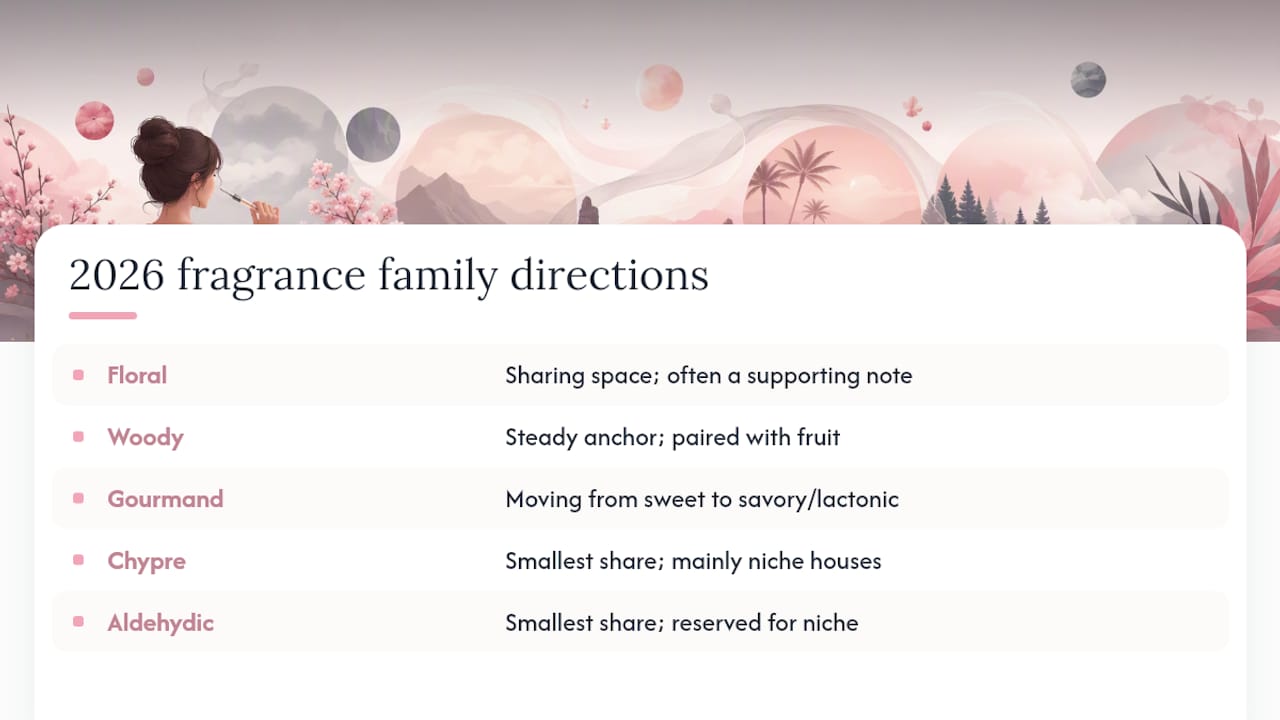
The overall direction is less about any one family winning and more about blending: florals softened by musk, fruit anchored by wood, gourmands made savoury rather than sweet. Pure, single-note fragrances in any classic family are becoming rarer at the affordable end of the market, replaced by layered compositions designed to be mixed further by the wearer.
Brands and designers setting the pace for 2026
Momentum in 2026 is coming from two directions at once, and they’re pulling in genuinely different ways. Established houses are leaning into the comfort-led, skin-scent side of the trend, softer musks, wearable gourmands, formats designed for daily reapplication rather than a single evening spray. Smaller, niche perfumers are pushing the opposite direction, toward the storytelling and “imperfect” accords covered earlier, using unconventional raw materials and narrative concepts that would have felt too niche for a general audience only a few years ago.
Affordable, mass-market brands sit in an interesting middle position. Rather than chasing either extreme, ranges built around body mists and layering are built specifically for the wardrobe concept itself: multiple scents designed to be mixed rather than one bottle meant to stand alone. That’s arguably a better fit for how younger fragrance shoppers actually behave in 2026 than either the luxury comfort play or the niche storytelling angle, since it doesn’t ask you to commit fully to one aesthetic before you’ve worked out what you actually like.
Social media’s grip on what smells “of the moment”
Fragrance discovery barely resembles how it worked even five years ago. #PerfumeTok and similar communities have compressed the gap between a note trending in niche perfumery circles and that same note showing up in an affordable mainstream mist, sometimes within a single season rather than years, a shift Allure ties directly to how much less risky experimentation now feels for everyday shoppers.
This has changed buying behaviour in a specific way: people are far more willing to try an unfamiliar note, lactonic, savoury, or an unusual fantasy accord, because they’ve already watched dozens of short videos describing exactly how it smells and wears before spending a penny. Sampling culture online has effectively replaced the in-store blind sniff test for a huge portion of shoppers.
It’s also why affordable formats matter so much right now. Nobody wants to spend heavily testing a trend they saw in a fifteen-second video that might not suit them at all. Cheaper mists and discovery sets let people follow social trends without the financial risk that used to come with trying something genuinely new.
Why 2026 rewards experimentation over commitment
The old model of picking one signature scent and sticking with it for a decade never really made sense for how people actually feel day to day, and 2026’s shift toward layering finally admits that out loud. Mood changes, weather changes, and honestly, most people get bored of smelling the same way every single day.
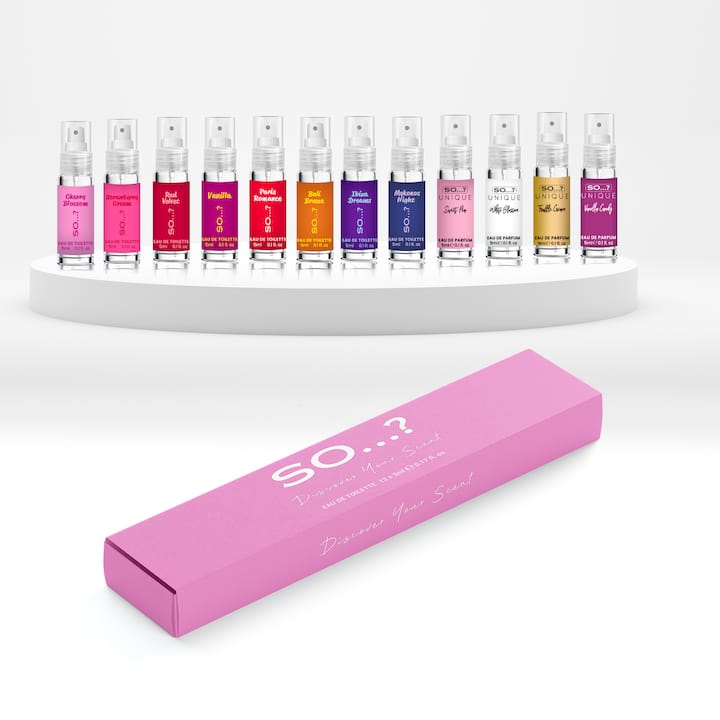
What’s easy to underestimate is how low the barrier to entry actually is now. You don’t need six full-price bottles to build a proper fragrance wardrobe, you need a handful of small formats and the willingness to try combinations you wouldn’t have considered a year ago. A discovery set with a dozen small scents and a bundle of body mists will teach you more about what actually works on your skin than reading ten trend reports ever will.
If you’re starting from nothing, the simplest first move is a mini discovery set paired with one body-mist bundle, testing a musk-and-fruit combination for daytime and a lactonic gourmand layered under something woodier for evenings. That’s genuinely enough to work out your own direction within a couple of weeks.
— Damini
Try the year’s biggest scent trends without committing to a full bottle
Building a fragrance wardrobe gets expensive fast if you’re buying full-size bottles to test every trend covered here, which is exactly the gap smaller formats are built to close. Rather than gambling on one full-price perfume, you get several genuine scent directions in miniature or mist form for a fraction of the outlay a single designer bottle would cost.
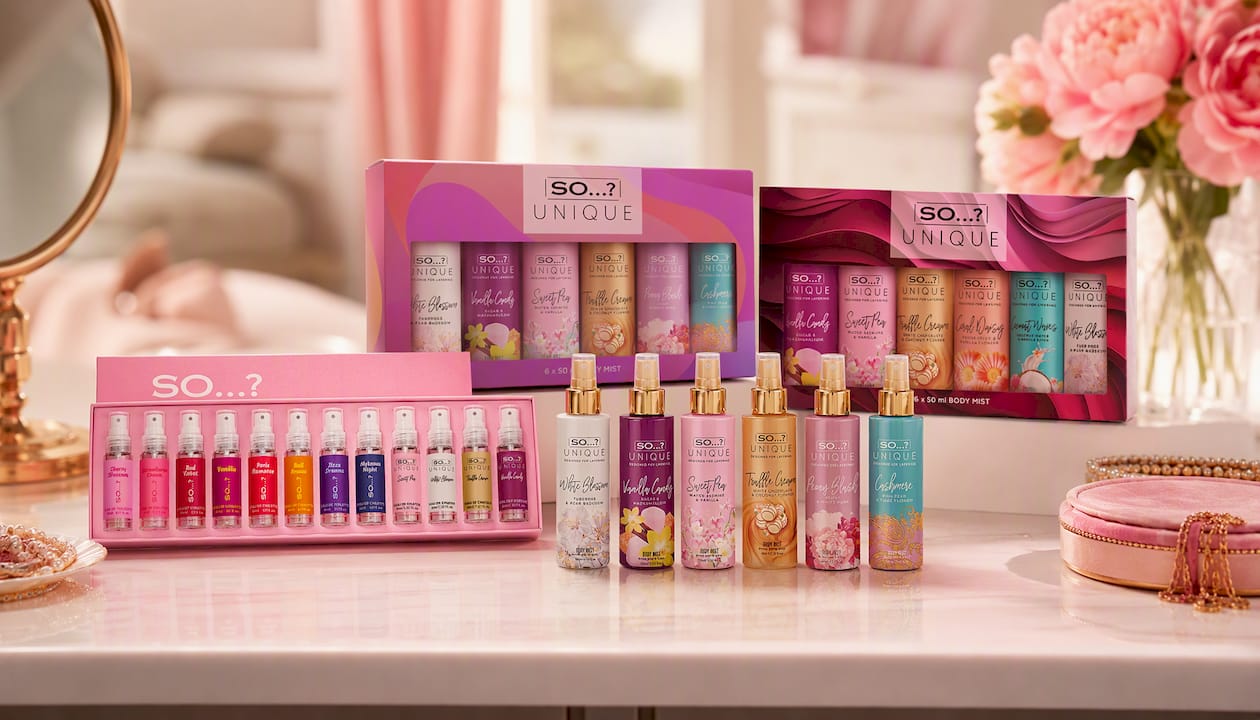
The SO…? Bestseller Mists Mini Discovery Perfume Set gives you twelve 5ml scents to test musk, fruity, and gourmand pairings without buying blind. If body mists are more your daily habit, the Petal Perfection six-pack body mist bundle offers enough variety to build proper layering combinations across a fortnight, and the Scent Haven giftset is a solid option if you’re buying for someone else who wants to experiment too. Explore the full body mist and spray range or check the layering masterclass guide for pairing ideas, then pick a set and start mixing this week.
Sources
- Fragrance trends 2026 | Vogue
- Best perfume trends of 2026 | Good Housekeeping
- The top perfume trends you need to know in 2026 | Harper’s Bazaar
- Fragrance is all about comfort and escapism in 2026 | Allure
FAQ
What are the most popular scents for 2026?
Lactonic gourmands (milk, rice, coconut), photoreal fruit like yuzu and dark plum, and creamy skin musks are dominating 2026 launches, usually worn layered rather than alone.
What new perfumes are coming out in 2026?
Expect more refillable formats, hair and body mists designed for layering, and niche-inspired accords like softened leather reaching mainstream ranges, alongside affordable discovery sets such as Sofragrance’s mini set built specifically for testing multiple trends at once.
What is the hottest perfume style right now?
The “skin halo” musk trend, soft, cosy base notes that make other scents sit closer to skin, is arguably the single most talked-about direction, since it underpins most of this year’s layering habits.
What are the current fragrance trends beyond gourmands?
Alongside lactonic gourmands, the biggest current directions are fruity photorealism, format innovation like solid balms and refillables, and a growing appetite for niche, slightly imperfect accords such as softened leather or unusual raw-material impressions.
Do I need expensive perfume to try these trends?
No. A mini discovery set or a body-mist bundle lets you test musk, fruity, and gourmand directions for a fraction of a full-size bottle’s cost, which is genuinely the easiest way to work out what suits you before committing further.
